What is stamped concrete, exactly?
Stamped concrete is a poured slab with a costume: while the concrete is wet, crews press patterned mats into the surface and add color (integral, broadcast, or both) so the finished slab resembles pavers, stone, brick, or wood. It's a legitimate decorative technique with real strengths — and it's structurally still exactly what it started as: one continuous, rigid slab. That single fact drives almost every difference in this comparison, because pavers are the opposite: hundreds of individual units in a flexible, interlocked system. We install pavers, not stamped concrete, so weigh our perspective accordingly — but the trade-offs below are the physics, not the pitch.
Do they really look the same?
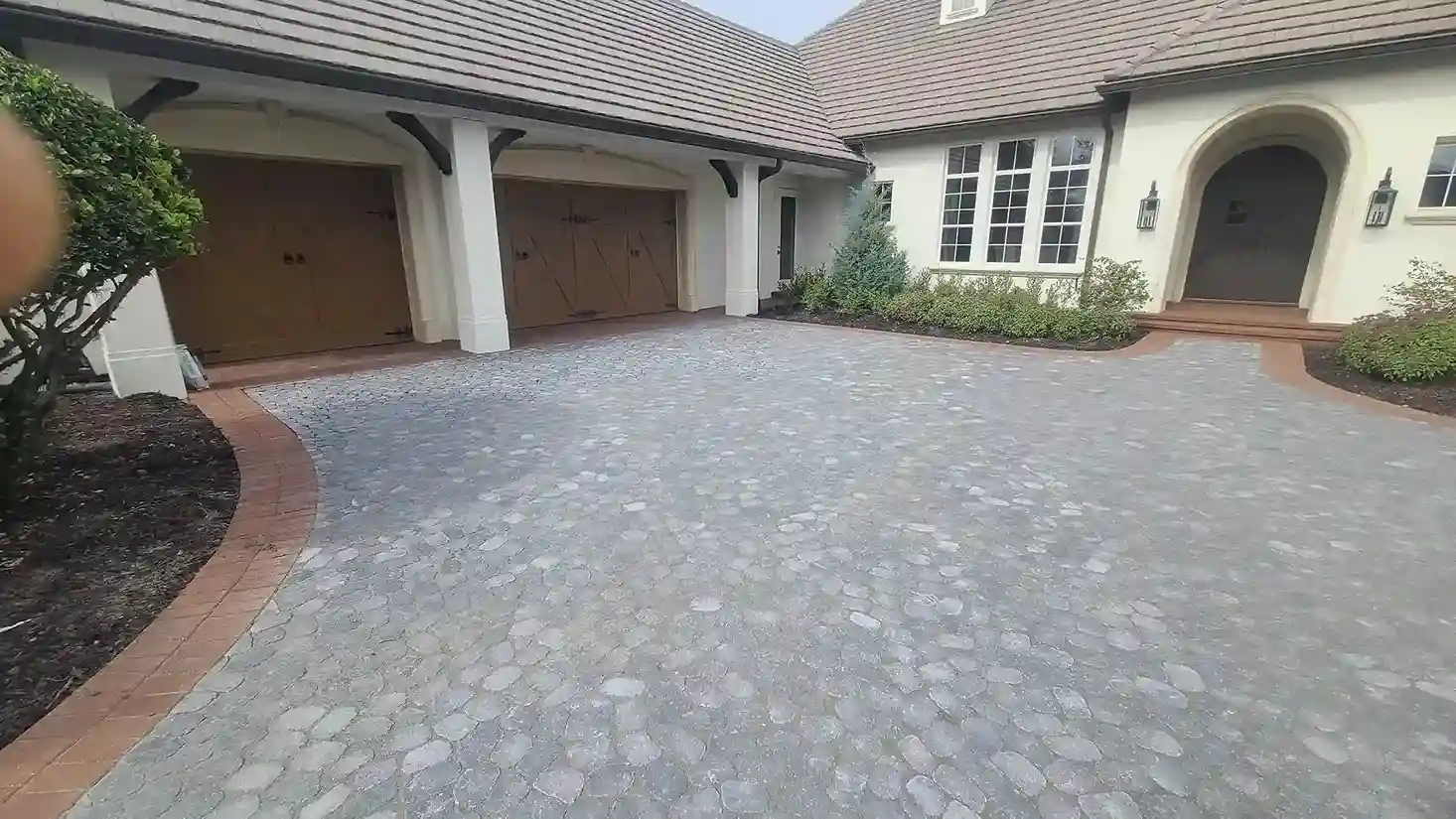
From the curb, a fresh stamped slab can look convincingly like pavers — that's the product working as designed, and modern stamping with layered color can be genuinely handsome. Look closer and the differences show: stamped patterns repeat (the same mat texture recurs across the surface), "joints" are impressions rather than real lines, and the surface color is a top layer rather than through the material. Pavers give you real joints, non-repeating variation, and — with the full catalog of patterns, borders, and formats — design depth stamping can only photograph. Aging is where the looks diverge most: stamped color coats wear thin in traffic lanes and reveal gray concrete, while quality pavers carry color through the unit.
What happens when Florida's ground moves?
This is the decisive section. Central Florida's sandy soils shift; daily summer rain and heat cycles work on every surface (our pavers vs. poured concrete comparison covers the climate case in depth). A rigid slab responds to ground movement the only way a rigid thing can: it cracks. Control joints are the industry's confession — deliberate lines telling the slab where to crack — and on a stamped surface, a wandering crack cuts across the pattern where everyone can see it, and repair means patching, which never matches stamped texture and layered color. A paver system responds by flexing: units ride minor movement, and if an area does settle, it's opened, the base corrected, and the same pavers relaid invisibly (how settlement works and gets fixed). One surface treats movement as catastrophe; the other treats it as maintenance.
How do repairs and changes compare?
- Stamped concrete: crack repair is visible patchwork; color touch-up is a blend job that rarely disappears; extending the surface later means a cold joint and a color match against weathered material. Resealing every few years is required to protect the color coat — skip it and the finish wears.
- Pavers: a stained or chipped unit swaps out in minutes (we leave extra pavers when available at handoff for exactly this); utility access means lifting and relaying, not saw-cutting; extensions weave into the existing field. Sealing is recommended but protective, not life-support (Sealing 101).
Also worth knowing: fresh stamped surfaces — especially smoother patterns, sealed glossy — can be slick when wet. Textured pavers are the more forgiving walking surface around water, which is why the pool deck conversation is usually a paver-vs-paver conversation.
Isn't stamped concrete cheaper, though?
Usually, yes — on day one. Stamped concrete typically installs below a comparable paver surface, and if the budget conversation ends at installation, it wins that conversation. The ten-year conversation is different: add the mandatory resealing cadence, the first structural crack, the patch that doesn't match, and the resale reality that buyers read cracked stamped concrete as a defect and pavers as an upgrade. Pavers cost more up front and then behave like an asset with a maintenance schedule. We'd rather quote your actual project than argue averages — but insist that any stamped bid you compare includes its resealing and crack-repair future, because that future is coming either way.
Is stamped concrete ever the right call?
Honestly, yes. A covered patio or lanai floor on stable ground, a decorative surface with no vehicle loads, a budget that simply won't reach pavers this year, or a design that wants one seamless plane — stamping serves those cases, and a good concrete contractor will do them proud. Our claim is narrower: for Florida driveways, pool decks, and exposed outdoor living surfaces — anywhere sun, rain, soil movement, and time get a full vote — the flexible system wins the decade, and it isn't close.
The bottom line
Stamped concrete is a slab wearing a paver costume: attractive new, rigid forever, and hard to fix gracefully. Pavers are the system the costume imitates: repairable, flexible, color-through, and built for exactly the conditions Central Florida supplies. If the look you want is pavers, build it out of pavers. See how we install them, or request a free quote and compare real numbers instead of averages.