Why the driveway question matters more here
Central Florida is hard on driveways. Intense summer heat, daily downpours in the rainy season, and sandy, shifting soil all work against a rigid poured slab. When concrete cracks — and in this climate it eventually does — the repair is a patch that never quite matches, or a full tear-out.
How pavers handle the same conditions
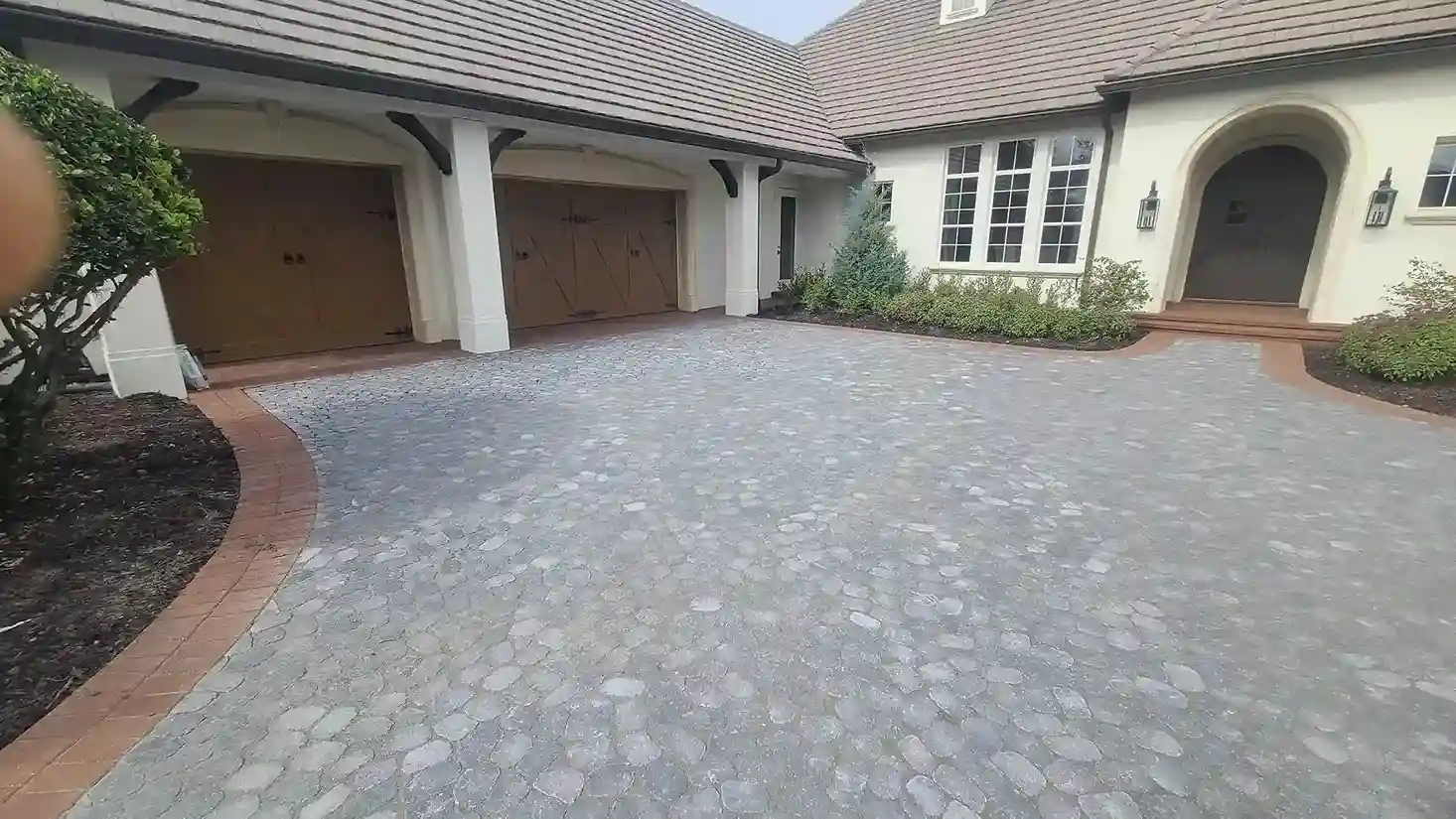
A paver driveway is a flexible system: individual units set over a compacted, graded base with sand-filled joints. That flexibility is the whole advantage. The surface moves with the soil instead of fighting it, water drains through and around the joints instead of pooling, and if a paver ever chips or stains, it can be lifted and replaced individually — no saw cuts, no mismatched patches.
What poured concrete does well
To be fair to concrete: it usually costs less up front and installs quickly. For a short-term hold on a property, that math can make sense. But over the life of the surface, patch repairs, crack filling, and eventual replacement close the gap — while a properly installed paver system keeps performing with basic maintenance.
The base is what you're really buying
Whichever surface you choose, the invisible work decides the outcome. At Alliance Pavers, every driveway starts with excavation, grading, and a compacted base engineered for vehicle loads and drainage. That's the difference between a driveway that stays flat for decades and one that ripples after two rainy seasons.
The bottom line
If you plan to stay in your home, want individual-unit repairability, and care about curb appeal, pavers are the stronger long-term choice for Central Florida. If you'd like to see how the numbers work for your specific property, request a free quote — we'll walk the site with you and give you an honest recommendation.