
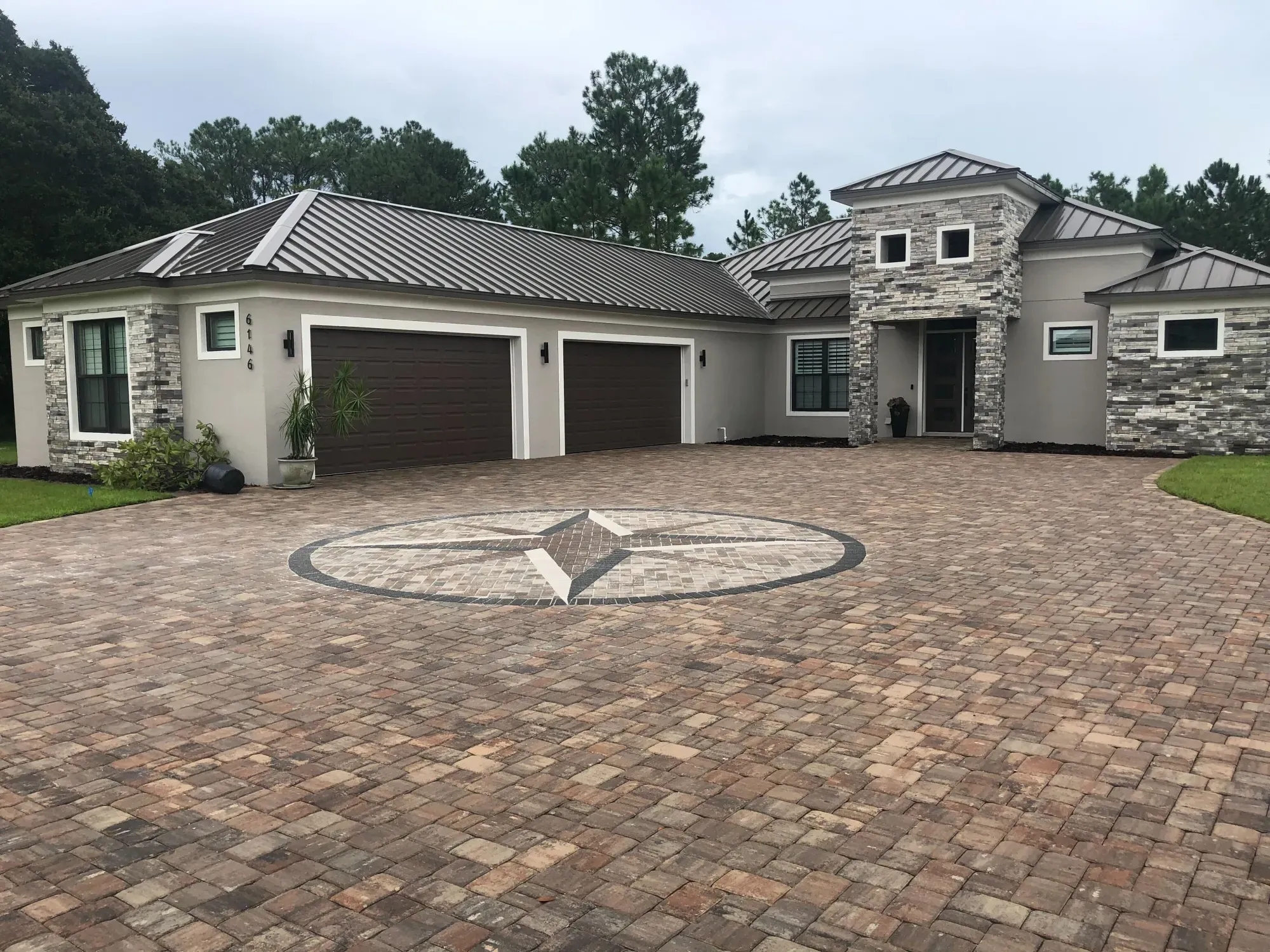
What is a paver driveway, structurally?
A paver driveway is a flexible pavement system: a stack of engineered layers that spreads vehicle loads into the ground while letting water move through and away. The pavers themselves are just the wear surface — the visible top of a structure that is mostly buried. When a driveway stays flat for decades, it's because every layer under the surface was built right. When one ripples, sinks, or sprouts puddles, the failure is almost always below the pavers, not in them.
Here's the full stack, from the ground up, the way we build it on every driveway we install.
Layer 1: The subgrade — your actual soil
Everything rests on the native soil, so the work starts with excavation: removing the old surface and enough material to make room for the base at the right finished height. Central Florida's sandy soils drain well, which is a genuine advantage — but loose sand also shifts under load, which is why we compact the subgrade before anything is placed on it. Grading happens here too: the subgrade is shaped to fall away from the house, because drainage is designed at the bottom of the system, not the top.
Layer 2: The compacted base — where the strength lives
On the prepared subgrade goes a structural base of crushed aggregate, compacted in controlled passes until it's dense enough to carry vehicles without settling. This layer does the real work of a driveway: it spreads the point load of a tire across a wide footprint of soil. It's also where corners get cut on cheap installations — a thin or poorly compacted base looks identical to a proper one on day one, and completely different after two rainy seasons. If you read one thing before hiring anyone, read why pavers sink; it's almost always this layer.
Layer 3: The bedding course — a precision screed of sand
Above the base sits a thin, uniform layer of bedding sand, screeded flat. Its job isn't strength — it's precision. The bedding course gives each paver a consistent seat so the finished surface is even, and it lets the pavers settle uniformly as the system locks together under compaction. Thicker is not better here: excess bedding sand creates soft spots. Flat, thin, and consistent wins.
Layer 4: The pavers — the wear surface you chose
Only now do the pavers go down, laid to the approved pattern with consistent joints and clean alignment. Driveways need driveway-rated units and a pattern with good interlock — herringbone earns its reputation under turning tires. Concrete pavers are the workhorse; brick and natural stone bring different looks with their own requirements. Whatever the material, individual units are the point: a stained or chipped paver can be lifted and replaced in minutes, which no monolithic slab can offer.
Layer 5: Edge restraints — the frame that holds it together
A paver field without restrained edges migrates outward under traffic until joints open and the pattern drifts. Edge restraints — we secure the perimeter with concrete edge restraints as part of installation — lock the field in place so the interlock can do its job. Failed or missing edging is one of the most common defects we find when we're called to repair someone else's driveway.
Layer 6: Joint sand — small detail, structural job
The final step is sweeping sand into the joints and compacting the surface so everything locks. Joint sand is what turns hundreds of individual pavers into one interlocked system — it transfers load between neighbors and keeps units from rocking independently. It's also a maintenance item: rain gradually washes it down, and topping it up is part of routine care (our Maintenance Membership includes joint sand replenishment for exactly this reason).
How do you know the invisible layers were built right?
You can't inspect a base after the pavers are on it — so the honest answer is process and accountability. Ask any bidder to describe their excavation depth, base material, and compaction step for your specific site. Ask what happens if the surface settles a year later. Our answer is written into the deal: every project follows the same documented six-step process, and final payment activates a 5-year workmanship warranty, which only makes business sense because of what's under the surface.
The bottom line
When you compare driveway quotes, you're mostly comparing layers you'll never see. The pavers are the smallest difference between a good installation and a bad one — the base, the edges, and the drainage are the rest. Start with an honest comparison of your options in our pavers vs. poured concrete guide, or if you're ready to talk about your driveway, see how we install them and request a free quote.